If you think someone is listening to your conversations, watching you or tracking your car, the company you call next matters almost as much as the device itself. A poor sweep can miss what is there, tip off the person who planted it, or leave you with a false sense of safety. Here are the ten questions to ask any bug sweep company before you let them in, and what a good answer sounds like.

1. Who will actually do the sweep?
Many firms sell the job and send whoever is available, or pass it to another provider. Ask who will be in your home or office, and what their background is.
At The Australian Bug Detection Group, every sweep is led by our director, an internationally trained technical specialist, alongside his team on larger jobs. Your job is never subcontracted to another provider, so you always know exactly who has been through your premises.
2. Are they licensed and insured?
Ask what security licence the company holds and whether it carries public liability and professional indemnity insurance. Insurance matters because a proper sweep means opening power points, ceiling spaces and fittings.
It is also worth asking about professional memberships, which show a provider is engaged with the wider security and counter-surveillance field.
The Australian Bug Detection Group holds a Victorian Security Licence, carries $20 million public liability and professional indemnity insurance, and is a member of ERII and ASIS International.
3. What equipment will they use?
A handheld “bug detector” bought online is not a sweep. Cheap detectors light up near any phone or Wi-Fi router, and they miss devices that are switched off or not transmitting.
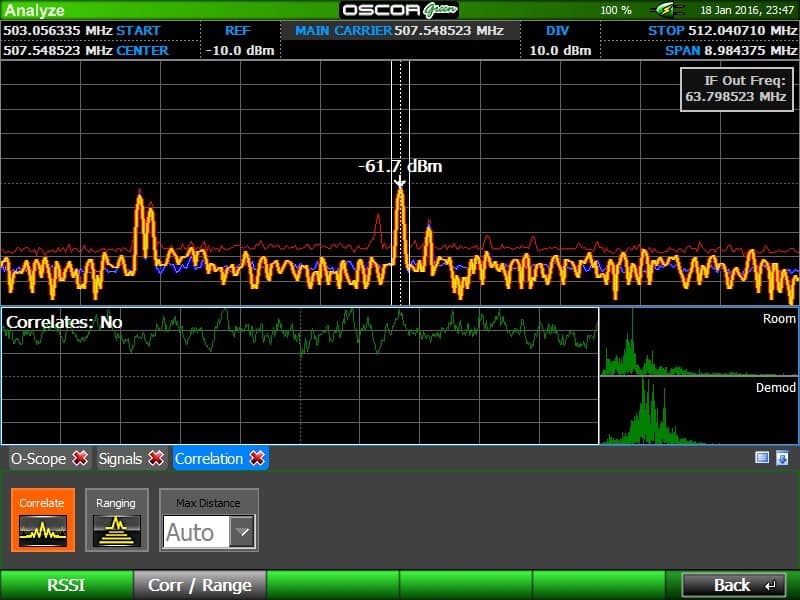
Ask for the actual equipment list. Ours includes an OSCOR Green 24 GHz spectrum analyser with Kestrel TSCM software, a non-linear junction detector, FLIR thermal imaging, lens detection for hidden cameras, and Wi-Fi and Bluetooth analysis.
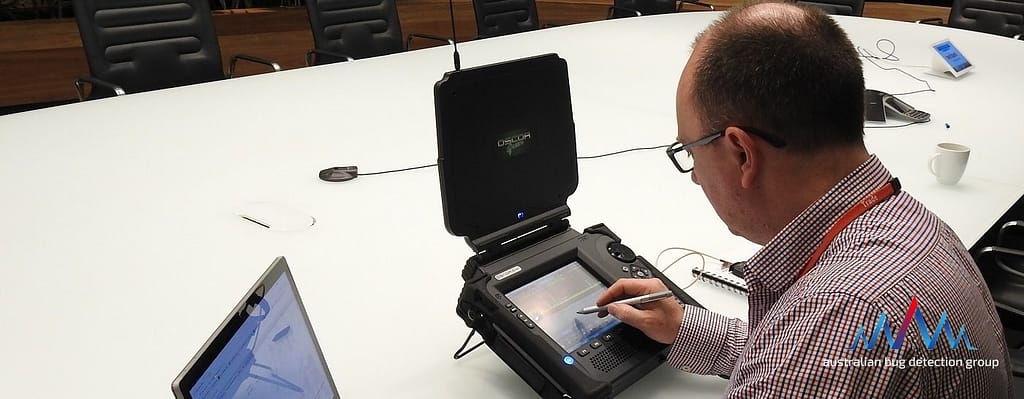
4. Is the method layered?
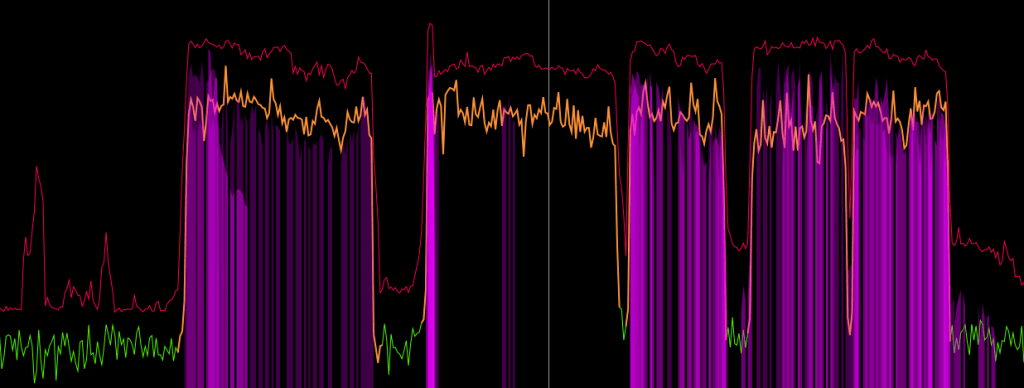
No single tool finds everything. Radio frequency analysis only finds devices that are transmitting at that moment. Many modern devices record silently to a memory card, or transmit in short bursts, and a quick radio scan will never see them.

A professional sweep layers several methods, so each one covers what the others can miss:
- Radio frequency analysis to find and verify transmitting devices
- Non-linear junction detection to find hidden electronics, even when they are switched off
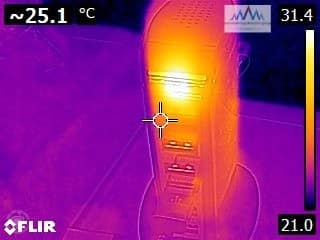
- Thermal imaging to spot devices by the heat they give off
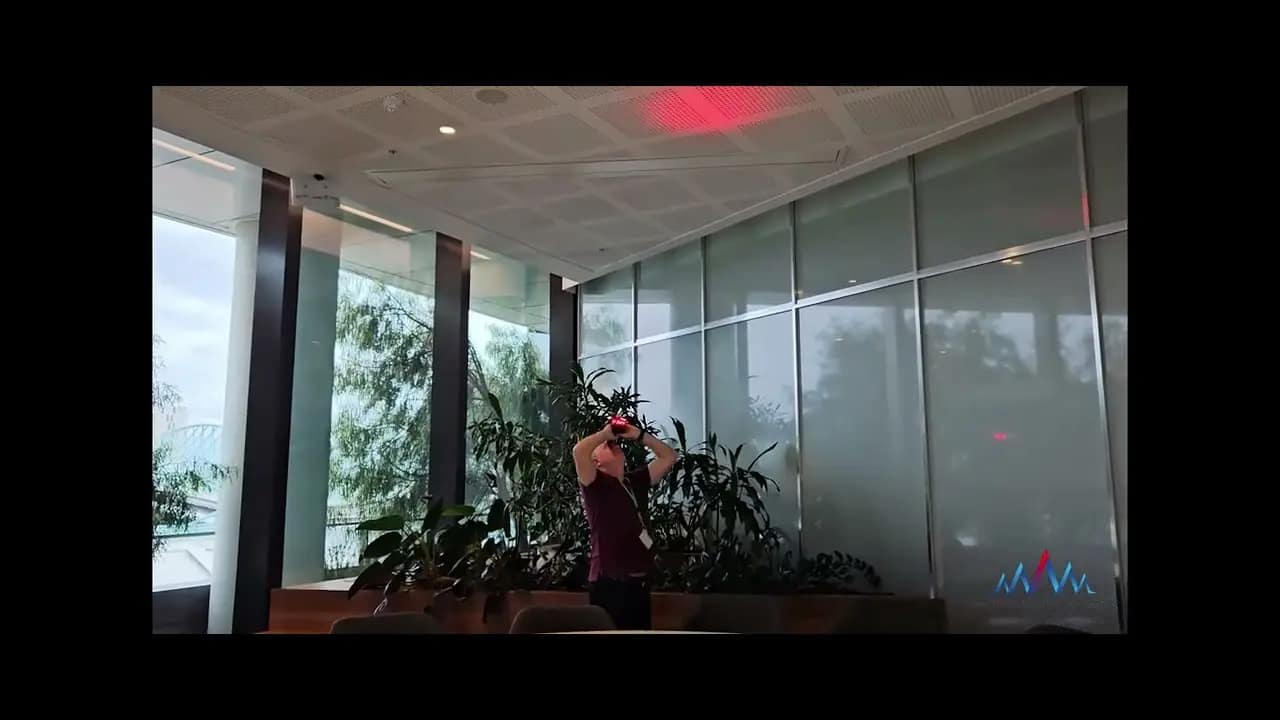
- Lens detection to find hidden cameras
- Wi-Fi and Bluetooth analysis to identify rogue networks, trackers and connected devices
- A hands-on physical search of power points, smoke detectors, ceiling spaces, furniture and everyday objects
5. Will they search physically, not just electronically?
Most devices are found by hand. Ask whether the sweep includes opening power and data points (where safe), checking kick boards, false ceilings and wall voids, and inspecting the everyday objects devices are hidden in: chargers, power boards, clocks and smoke detectors. If a quote doesn’t mention a physical search, ask why.

6. Can they check vehicles and phones?
Surveillance rarely stops at the front door. GPS trackers, Apple AirTags and other BLE (Bluetooth Low Energy) devices are cheap and easy to hide on a car, and a compromised phone can expose your calls, messages, camera and location. Ask whether the company covers vehicles and phones as well as rooms. We sweep homes, offices, vehicles and mobile phones. You can read more about how we locate GPS trackers.

7. How do they protect your confidentiality?
Discretion is part of the job. If someone close to you planted a device, advance notice gives them the chance to remove it. A good provider works on a need-to-know basis, avoids drawing attention to the visit, and is happy to sign your non-disclosure agreement.
We work outside business hours, only the people you choose are told, and we never discuss our clients or their work.
8. What happens if they find something?
Ask before the sweep, not after. A device can be evidence. The right response is to stop, document it in place and advise you on your options before anything is disturbed, so evidence is preserved if you go to police or take legal action. That is exactly how we handle a find.
9. What will you receive at the end?
You should get more than a verbal “all clear”. Ask whether you will receive a written report setting out what was inspected, how, and what was found. Every sweep we carry out, home or business, ends with a written report.
Many sweeps find no technical threat, and that is a good outcome. It means you can speak freely again and stop wondering.
10. How is the job quoted?
Every home, office and vehicle is different, so be wary of a price given before the provider understands the job. Ask what is included, how long it will take and whether the quote is the total cost.
We quote every job individually after a confidential conversation. Businesses can send a floor plan for a confidential review. Depending on the size of the site, a sweep takes from about four hours to a couple of weeks.
Red flags

- “Guaranteed to find everything.” No honest provider promises that.
- “We always find something.” A sweep that always finds a device is selling fear.
- No written report or no clear scope.
- Wand-only sweeps: a cheap handheld detector and nothing else.
- Offers to jam signals. Signal jammers are illegal to possess or use in Australia.
- Pressure to announce the sweep, or to discuss it in the space you are worried about.
Before you call anyone
- Call from a phone outside the area of concern, ideally not your own mobile if you think it may be affected.
- Don’t discuss your concerns inside the space you are worried about, or by email or message on a device that might be compromised.
- Keep it need-to-know. Tell as few people as possible.
- If you feel unsafe, call 000. If you are worried about stalking or family violence, 1800RESPECT (1800 737 732) offers confidential support 24 hours a day.
Talk to us confidentially
The Australian Bug Detection Group has carried out technical surveillance countermeasures for corporate, government and residential clients since 2014, based in Melbourne and operating across Australia. If you have a concern about your home, business or vehicle, call 0410 092 207 from a safe phone, or get in touch through our contact page for a confidential conversation.