In October 2026, one of the most closely watched technology companies in the world confirmed it had found a hidden recording device in an executive conference room at its San Francisco headquarters. An engineer has since been arrested by the FBI and charged with intercepting oral communications.
If a company with OpenAI’s resources and security budget can have its boardroom bugged, so can yours. The more useful lesson, though, is not that the device was planted. It is how it was found, and how quickly.
What happened
According to the criminal complaint and statements from OpenAI, as reported by US media:
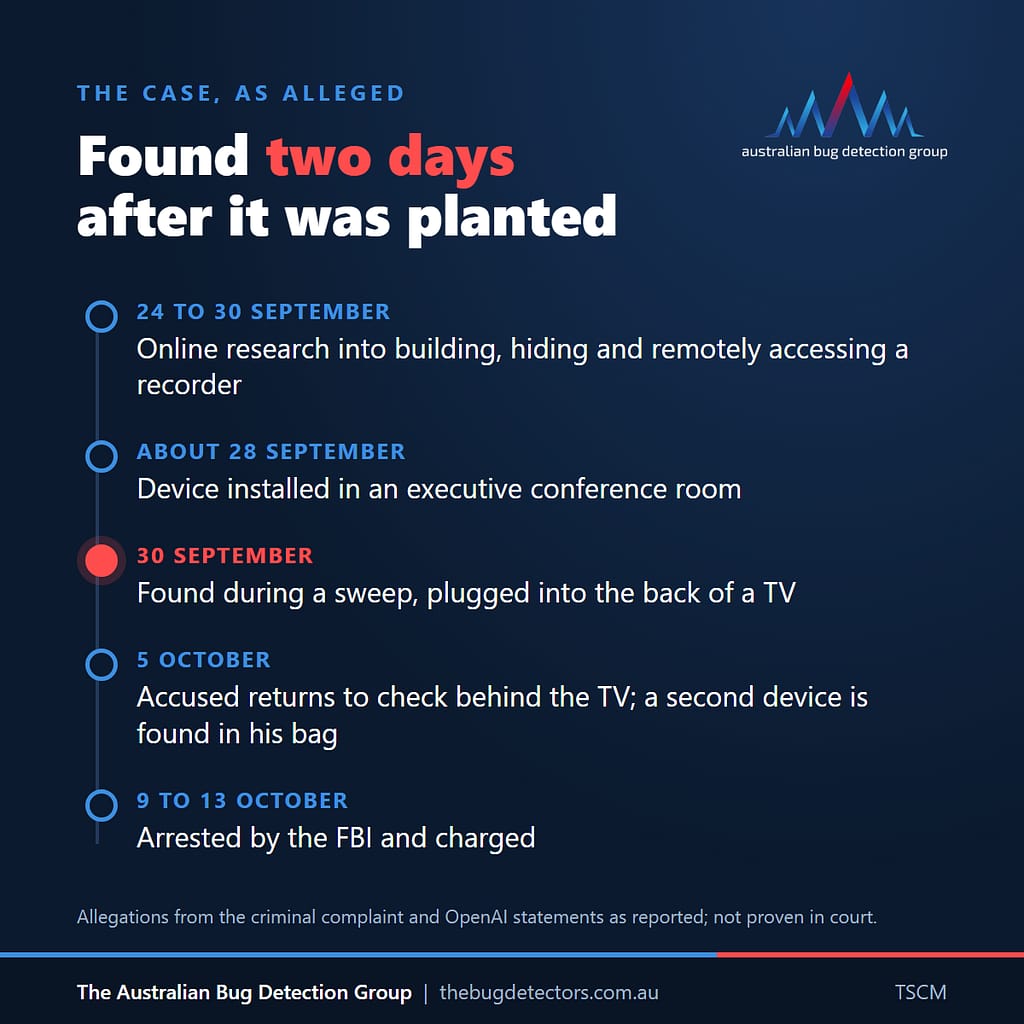
- The device was found on 30 September, plugged into a USB port on the back of a television in an executive conference room and wrapped in toilet paper to hide it.
- It had been there for about two days. OpenAI believes it was installed on or around 28 September.
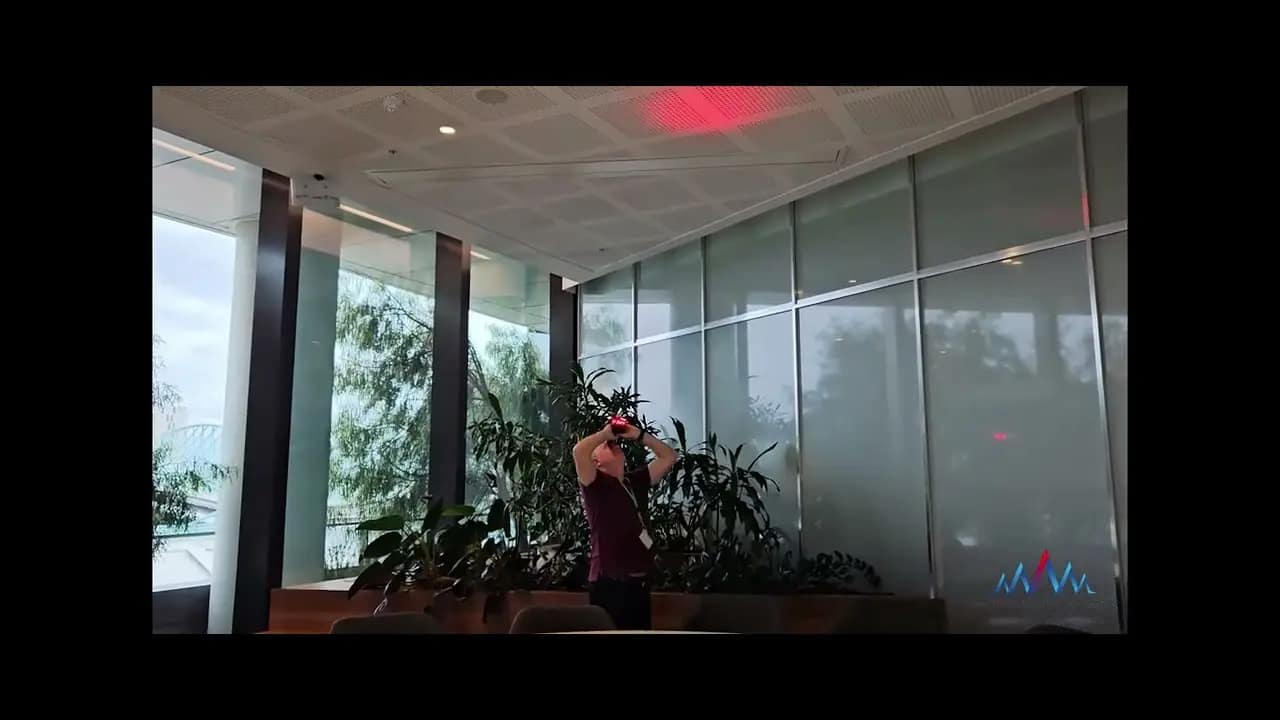
- It was found during a sweep. OpenAI’s account is that its technical surveillance countermeasures (TSCM) team located the device during a sweep of the room.
- The room mattered. It hosted confidential technical, commercial and strategic meetings, including product plans and government engagements.
- The planning was deliberate. Prosecutors allege the accused researched office locations, meeting rooms, calendars and leadership meetings, and used an AI chatbot to ask how to build, conceal and remotely access a recording device.
- More devices were allegedly planned. On 5 October, prosecutors allege, he returned to the room to look behind the television, and a second, similar recording device was found in a bag he had left unattended. OpenAI says it has evidence he intended to place devices in other sensitive spaces.
- He was arrested on 9 October and charged. OpenAI says it has no indication that model weights, source code or customer data were accessed.
These are allegations and have not been tested in court. The lessons for every organisation stand regardless of the outcome.
Lesson 1: the threat was already inside the building
The accused was an employee with a valid pass. Access control did its job; it simply could not tell a colleague attending a meeting from a colleague planting a device. Most corporate security protocols are built to keep outsiders out. Technical surveillance is very often an insider problem: a staff member, a contractor, a cleaner, an after-hours tradesperson, or a visitor left alone in a meeting room for five minutes.
A TSCM sweep does not care who planted a device or how they got in. It looks for the device itself.
Lesson 2: the hardware cost about the price of lunch
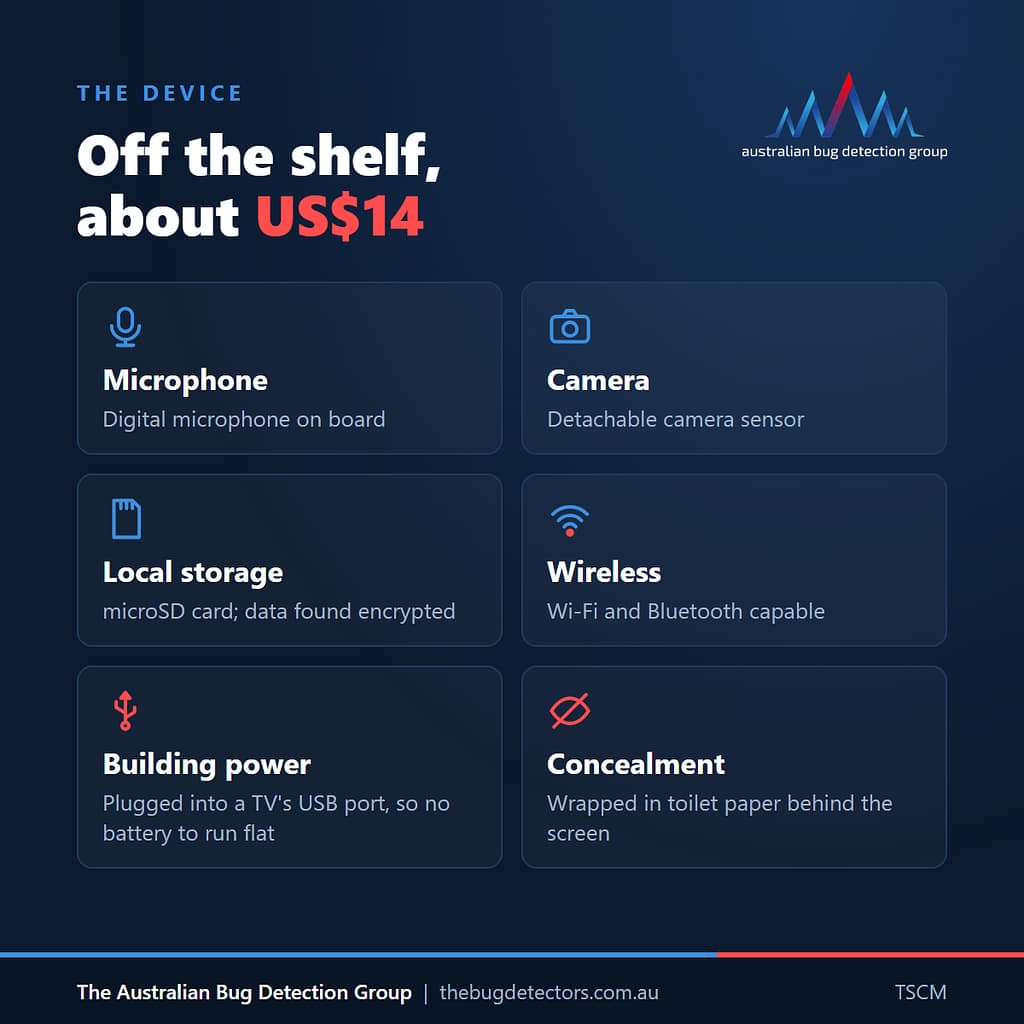
Reporting identifies the device as an off-the-shelf development board that retails for around US$14. It carries a digital microphone, a detachable camera sensor and a microSD card slot, and the chip on the board supports Wi-Fi and Bluetooth. It is smaller than a thumb.
By plugging it into the television’s USB port, the person who planted it gave it permanent power from the building: no battery to run flat, no reason to return. The data recovered from it was encrypted.
This is what technical surveillance looks like now. It is not a spy-movie gadget. It is cheap, generic electronics that anyone can buy online, configured with freely available instructions, and hidden in the place nobody looks: behind the screen everyone in the room is looking at.
Lesson 3: the sweep is what caught it
The most important detail in this case is the timing. The device was in place for roughly two days before it was found.
Imagine the same room swept once a year, or only after a suspected leak. A device with permanent power and local storage could have sat behind that television through months of board meetings, product reviews and partner negotiations. Instead, a sweep found it within days, and the investigation that followed traced it back to its alleged owner.
That is the difference between TSCM as an event and TSCM as a protocol.
A sweep is only clean until the next visitor
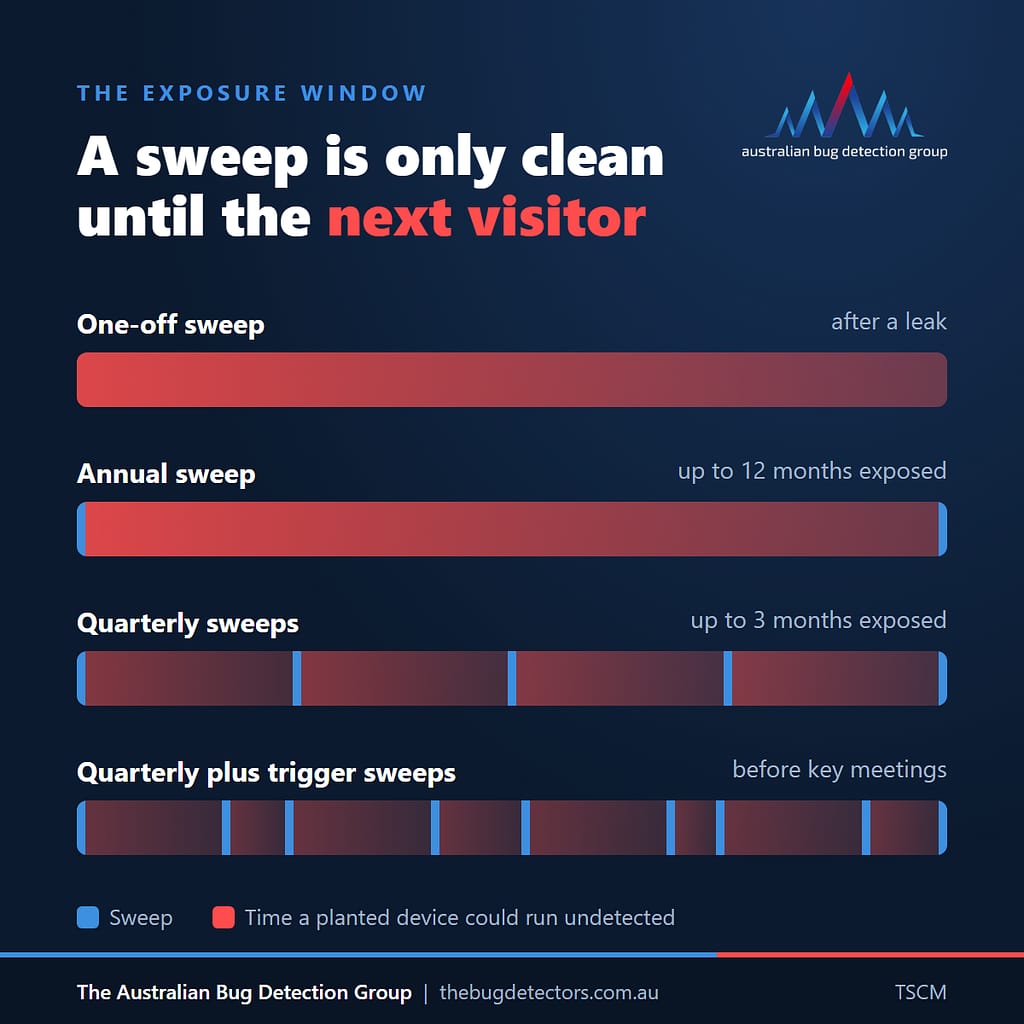
A sweep confirms that a room is clean at the moment it is swept. From then on, every visitor, contractor and after-hours cleaner is a fresh opportunity to plant something. The time between sweeps is your exposure window: the period in which a planted device can run undetected.
- A one-off sweep after a leak finds what is there today, but only after the damage has been done.
- An annual sweep leaves up to twelve months in which a device could operate.
- Quarterly sweeps cut that window to around three months.
- Quarterly sweeps plus trigger sweeps before mergers, tenders, litigation and board strategy sessions close the gap exactly when it matters most.
That is the purpose of a scheduled sweep program: to reduce the window of opportunity for a perpetrator to deploy a threat device, and to find one quickly if they do.
What an ongoing TSCM protocol looks like
Building TSCM into your security protocol does not mean sweeping every room every week. It means treating your most sensitive spaces as a controlled environment, with a schedule, triggers and records.
- Identify your sensitive spaces. Boardroom, executive offices, the rooms where strategy, legal and commercial negotiations happen, and executive vehicles.
- Set a sweep schedule that matches your risk: quarterly is a sensible baseline for most corporate boardrooms.
- Define your trigger events. Mergers and acquisitions, tenders, major litigation, leadership changes, staff departures on bad terms, and any unexplained leak.
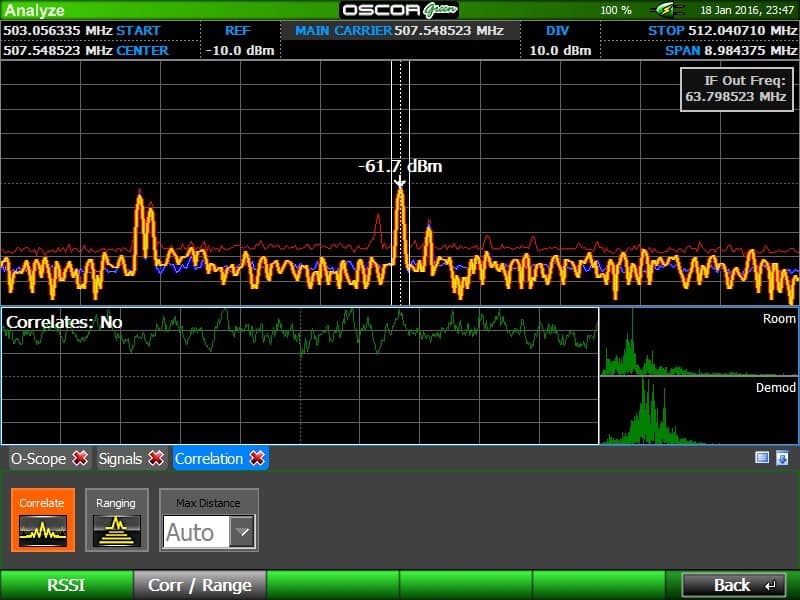
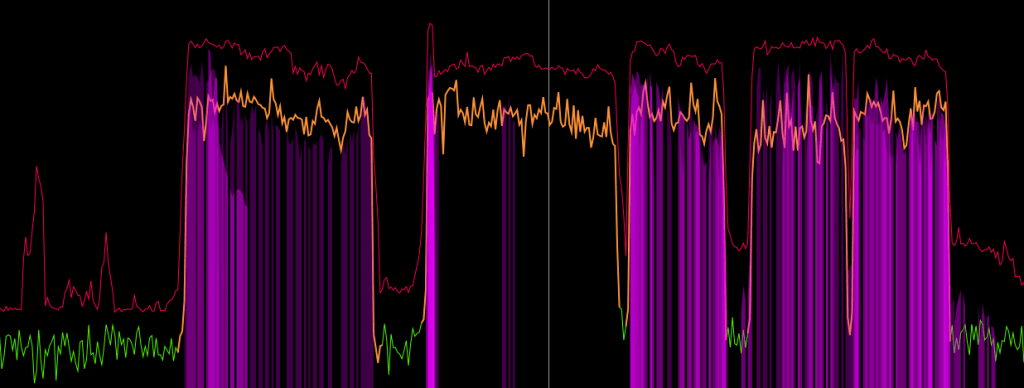
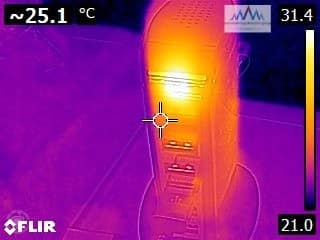
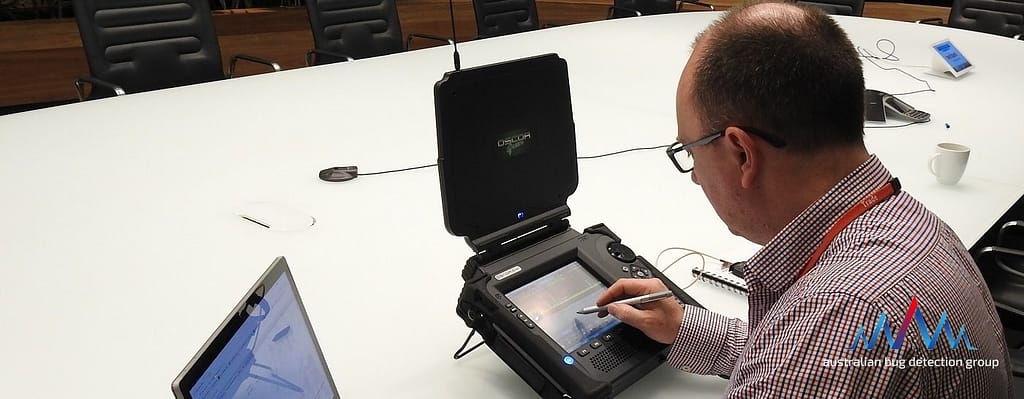
- Inspect what is plugged in. USB ports on televisions and conferencing equipment, power boards, chargers and ceiling spaces are prime hiding places. A professional sweep combines radio frequency analysis, non-linear junction detection, thermal imaging and a hands-on physical inspection, because a device that records to a memory card may never transmit at all.
- Report it to the board. A written report after each sweep gives your risk or audit committee evidence that the control is working.
Australian organisations are not exempt
Australia’s own security agencies have repeatedly warned that espionage and foreign interference target Australian businesses, research institutions and government. Commercial competitors, disgruntled insiders and criminals use the same cheap tools. The OpenAI case happened in San Francisco, but the boardroom, the television and the US$14 device are the same in Melbourne, Sydney, Brisbane, Perth or Canberra.
How The Australian Bug Detection Group can help
The Australian Bug Detection Group has provided technical surveillance countermeasures to corporate, government and residential clients across Australia since 2014. Every sweep is led by our director, an internationally trained technical specialist, alongside his team, and projects are never subcontracted. Our scheduled corporate programs build TSCM into your security protocol with regular sweeps, trigger sweeps before sensitive events, and a written report after every visit.
Every site is different, so every program is quoted individually. Send us your floor plan for a confidential review and quote.
Call 0410 092 207, email alan@thebugdetectors.com.au, or use the contact page at www.thebugdetectors.com.au.